ANALYSIS OF PREVIOUSLY ASKED QUESTION (5:05 PM):
|
With reference to agriculture in India, how can the technique of ‘genome sequencing’, often seen in the news, be used in the immediate future? (2017 prelims) Answer: (d) |
Biotechnology:
- It uses living processes, organisms, and their systems to manufacture products or technology intended to improve the quality of human life.
- It uses Genetic engineering which is a process of altering the DNA or RNA/ modification of the genetic material.
- The application of the knowledge of these technologies is called Applied Biotechnology.
-

Recombinant DNA Technology:
- Recombinant DNA technology comprises altering genetic material outside an organism to obtain enhanced and desired characteristics in living organisms or as their products.
- This technology involves the insertion of DNA fragments from a variety of sources, having a desirable gene sequence via the appropriate vector.
-
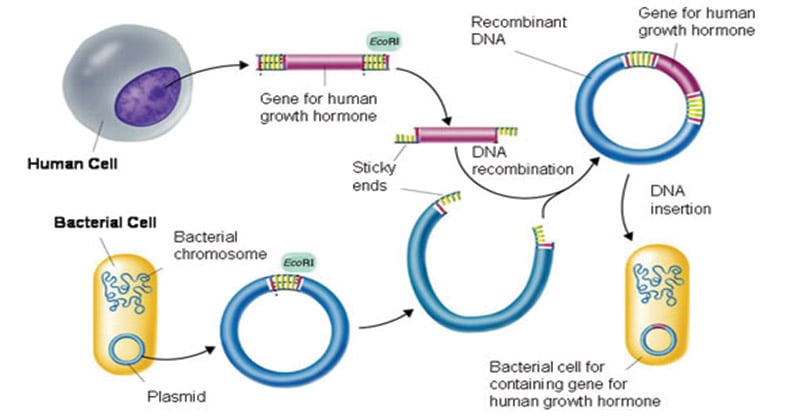
Steps:
- Isolation of the desired gene(let us assume the Hunam Growth Hormone).
- The nuclease enzyme will help in cutting the desired gene from the DNA.
- Vector is the DNA that carries the desired gene.
- Here we will use Plasmid as a vector.
- A plasmid is a small, circular, independent DNA in bacteria and viruses.
- The desired gene is joined to a vector to give the recombinant DNA.
- For the vector, bacterial cells are chosen.
- Ligase enzyme is used for joining.
Viral Vector Vaccines :
- They are made from a virus that got altered in the laboratory and cannot cause disease.
- We need to use the gene coding for the antigen which will help the Human B Cells to produce the desired immune response through antibodies.
- As the disease virus is not administered fully, but only a gene of the virus, combined with a viral vector, the B cells will produce antibodies for that, and the body will acquire a disease resistance memory without actually getting the disease.
- The desired gene here will be gene which will have the gene coding for the antigen of the COVID-19 virus.
- Viral vectors are that virus which has been designed as tools to deliver genetic material into cells.
- The Viral Vector is mainly sourced from adenovirus from some other species (commonly chimpanzees) because human B cells will not identify them as a threat.
- So the B cells will only create antibodies against the virus, and not against the vector.
- It can be represented as:
- Desired Gene + Vector = Recombinant Adenovirus(RA).
- RA will be the adenovirus which will have the gene coding for the antigen of the COVID-19 virus.
- Live attenuated vaccines contain a version of the living virus that has been weakened so that it does not cause serious disease in people with healthy immune systems.
- Viral vector vaccines- Covishield and Sputnik.
- The side effects of the vaccine- fever, headache, etc. are due to our immune system.
|
Recombinant DNA technology (Genetic Engineering) allows genes to be transferred (Prelims 2013) (5:30 PM):
1. Across different species of plants. Which of the above statement/s is correct?
|
Gene Editing:
- It is a process by which genes can be added, deleted, or replaced by the use of genetic engineering.
- Gene editing of the embryo should happen early, ideally before the first cell division, that is, directly with or right after fertilization.
- CRISPR (Clustered Regularly Interspaced Short Palindromic Repeats”) is a technology that can be used to selectively modify the DNA of living organisms.
-

CRISPR- Clustered Regularly Interspaced Short Palindromic Repeats:
- It is also called a gene editing tool, molecular scissors, etc.
- Jennifer Doudna and Emmanuelle Charpentier got the Chemistry Nobel Prize in 2020 for this.
- This was the first instance when two women were given a Nobel prize together.
-
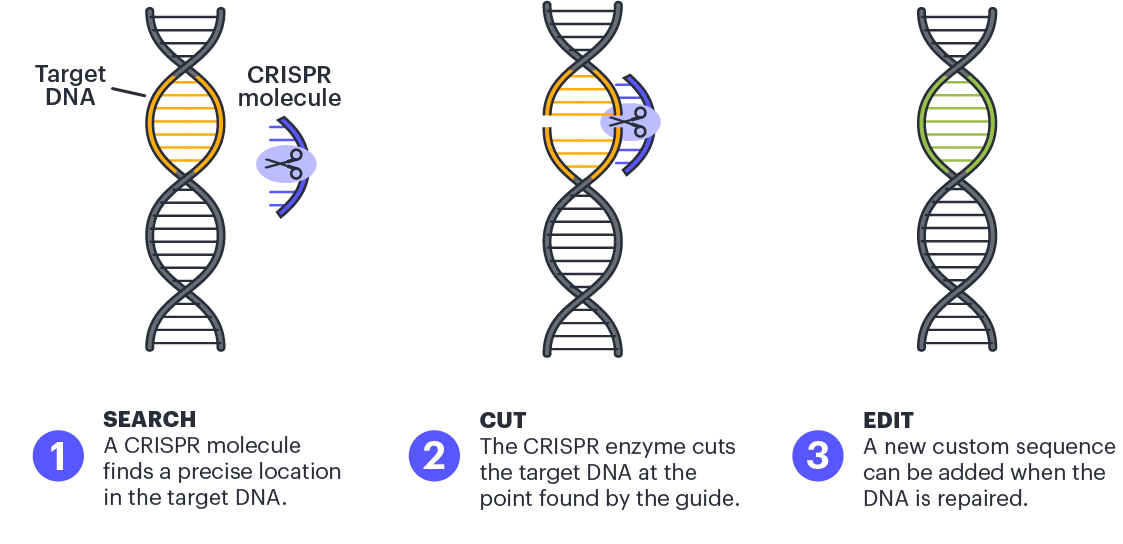
The process includes:
- Single-guided RNA- Sg RNA is used as the guidance molecule.
- This is unique as this is double-stranded.
- The guidance molecule can be prepared to identify different parts of the genome.
- The guidance molecule will guide us to the site of the defective gene which, must be edited out.
- Once identified, the Cas 9 protein cuts the DNA at that specific site.
- Cas9 protein/enzyme- is used as the Nuclease which is used for DNA cutting.
- Sg RNA guides CRISPR to the specific parts of the genome where the CAS 9 enzyme cuts the DNA.
- The technology is in an experimental state and it is not been applied as of now.
- The Ligase enzyme is used for joining the cut gene.
Designer babies:
- A designer baby is a baby genetically engineered in vitro for specially selected traits, which can vary from lowered disease risk to gender selection, and even enhanced physical traits.
- It has various ethical issues associated with it, so as of now, a consensus-based moratorium is imposed on it.
Gene Therapy:
- In case of a gene defect because of a non-functional gene, a normal corrective gene can be added additionally to take over the function to compensate for the non-functional gene
- This technique has been in use for some time for diseases like Cystic Fibrosis.
- In the case of genetic diseases, a normal corrective gene can be added to take over the function to compensate for the non-functional gene.
- This therapy will not interfere with the overall DNA and even the defective gene will continue to be present.
- This can also be done after birth.
CLONING (6:00 PM):
- In normal reproduction, both parents provide half of the genetic material to the offspring.
- In cloning, a single Parent provides the complete genetic material.
- Gametes have half the number of chromosomes (haploid), while somatic cells have the complete set of chromosomes (diploid).
Animal Cloning:
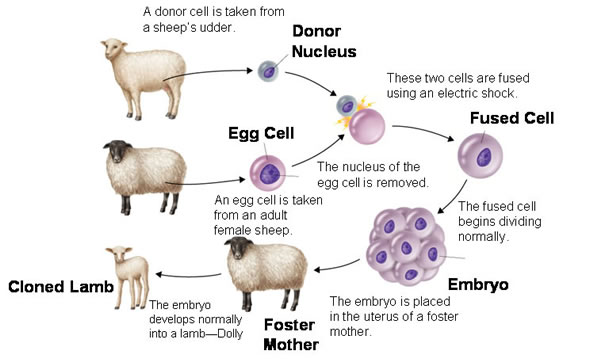
- We need to take the somatic cell of the animal we wish to clone.
- The presence of an egg is essential for the further development of the zygote.
- A different donor would provide the egg( none of her properties will be transferred into the clone).
- Since we do not need any genetic characteristics of the donor, we must do the process of Enucleation for the removal of the nucleus.
- We will keep the somatic cell nucleus of the animal to be cloned, and we will keep the empty egg of the donor without the nucleus.
- Through Somatic Cell Nuclear Transfer, we will have the egg of the donor with the somatic cell nucleus of the animal.
- This new egg can be stimulated to form an embryo, which can be later transplanted into the uterus.
- The offspring will be an exact copy of the somatic cell donor animal.
-

- The process needs no sperm cells.
- If we need to clone a female, we can take the somatic cell and egg from her, and then implant the embryo in herself.
- The offspring will be genetically identical.
- Cloned animals (like dolly sheep)have shown very small life spans.
-
-
Cloning of Amitabh Bachchan :
- We would need his somatic cell; any cell other than the sperm cell.
- All the somatic cells will have all 46 chromosomes.
- We must then remove the nucleus of that somatic cell that we have taken from Mr Bacchan.
- We can then source an egg cell from any interested & reproductively capable woman.
- If we wish the baby to be an exact replica of Mr. Bacchan, we must remove the nucleus from the donor egg cell and replace that with the nucleus from Mr. Bacchan’s somatic cell.
- The new egg cell will be fertilized into an embryo.
- The resultant embryo can be implanted in any other willing woman.
- This will not be a "fertilization " process as such, and in layman's language, the process can be taken similarly to photocopying.
- Unlike females, males cannot do the process alone because the egg is needed for the process.
- Human cloning is still in the theoretical stages.
- Since no fertilization between the gametes takes place, cloning is different from in-vitro fertilization.
Purposes of Cloning:
- The main motive behind animal cloning is to preserve a species.
- It can also be used for the continuation of desired characteristics.
- For example- If a sheep has a very good milk yield, and it reproduces naturally, then the baby will also have the characteristics of another parent.
- So the natural baby might have a lesser milk yield.
Some issues with cloning:
- The success rate of fertilization and survival of such offspring is very low.
- Around 200 embryos had to be discarded before Dolly.
- Cloned animals are seen to have much less immunity.
- Even IVF technology has around a 15% success rate.
- It is estimated that a human clone baby will have a head too big for the vaginal opening.
THREE-PARENT BABY (6:45 PM):
- Mitochondria have their own DNA (mt DNA) with only 37 genes, so it makes no difference in the overall personality traits of the individual.
- Defective mtDNA can cause various diseases like Leigh disease.
- Nuclear DNA comes half each from both the parents but mt DNA is inherited only from the mother.
- This means any female with defective mt DNA will definitely transfer it into the offspring.
Mitochondrial replacement/ Pronuclear transfer technology:
- If the mother’s mtDNA is defective, we would need an egg donor.
- We need to remove the donor egg's nucleus because we do not need the characteristics of the donor.
- In the new egg, there would be the mother’s nucleus with the donor’s normal mtDNA.
- This egg would be then fertilized with the sperm cells from the father.
-

- The baby will not have the mitochondrial disease.
- The baby will contain the DNA of the three people involved.
- The removal of a defective mother's mitochondrial DNA can be done even after the zygote formation.
- We can replace the defective mitochondrial DNA of another zygote which was formed with a mother with healthy mitochondria.
- If the replacement is done through an unfertilized egg, the process is called Maternal Spindle Transfer.
- If the replacement is done through a fertilized egg(zygote), the process is called Pronuclear Transfer.
STEM CELL (7:05 PM):
- Stem cells are unspecialized cells that can divide and grow into different types of cells.
-
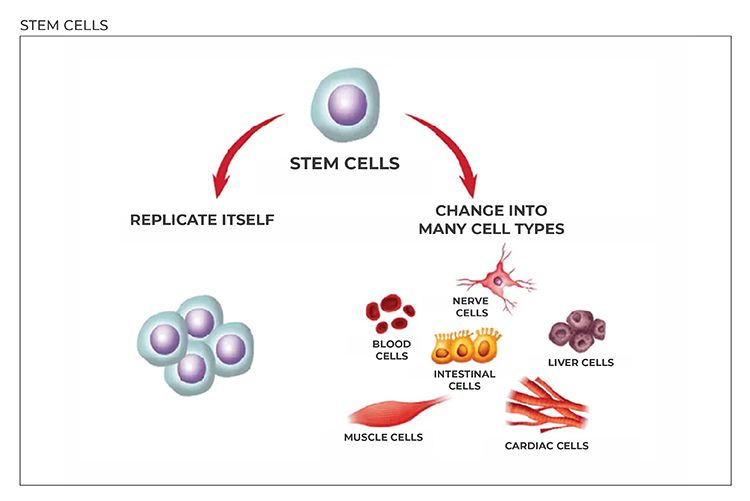
Types of stem cells:
I. Embryonic stem cells:
- They exist at the early stages of life and can change into any type of cell.
II. Adult stem cells:
- They are present in different tissues like the skin, brain, and bone marrow, and they can create new cells specific to that tissue.
III. Pluripotency/Pluripotent cells:
- They can form any cell in the body, except those needed to support and develop the fetus (extra-embryonic membranes).
Induced pluripotent cells:
- These can be induced to divide and become stem cells, in the lab
- For example, we can treat the muscle cells to make them pluripotent cells to give rise to blood cells/liver cells, etc.
-
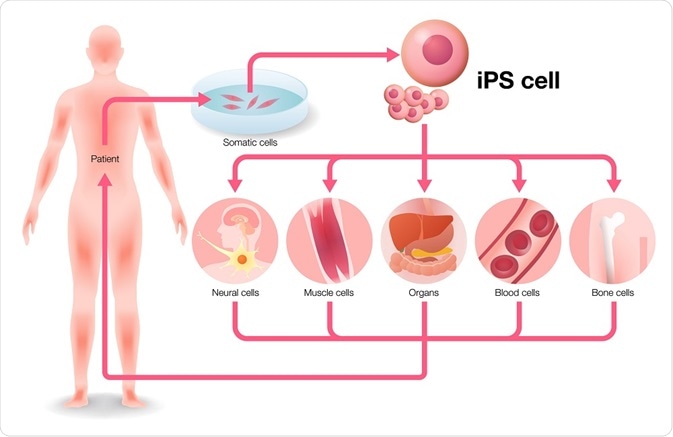
Potential applications of stem cell technology:
- There can be multiple uses of stem cell therapy like the treatment of organ failure.
- As of now, most stem cells are derived from adults, which poses difficulties in the extraction of specialized cells.
- For example- for an issue with the brain, it must take the stem cells of the brain of the adult, which would be difficult to react to.
- Nowadays, there has been a focus on obtaining embryonic stem cells that can be sourced from the umbilical cord after birth.
- The cord has a special liquid that has embryonic stem cells, that can be preserved under cryogenic (super-low temperature) conditions.
- This storage practice is called placenta banking.
- This program will have very high rates because the resultant organ will be of the baby's own.
- Even using these stem cells to replace the organs of another family member will have a much higher success rate.
-

|
Question: With reference to "stem cells", frequently in the news, which of the following is/are correct? (Prelims 2012)
1. Stem cells can be derived from mammals only. (a) 1 and 2 only (b) 2 and 3 only (c) 3 only (d) 1,2 and 3 Answer: (b) Approach: Stem cells can be derived from animals including and beyond mammals. |
Sources for Biotechnology:
- Current Affairs- PT 365, Mains 365.
- Selective study from the website of the Department of Biotechnology.
- We expect only application-based questions from this topic in mains.
- Yojana, Kurukshetra magazines( only selective reading).
VARIOUS USES OF BIOTECHNOLOGY (7:35 PM)
- Blue biotechnology: Marine.
- Green biotechnology: Agriculture.
- Red biotechnology: Medical.
- White biotechnology: Industrial.
- Grey biotechnology: Environment.
Genetically Modified Organisms:
- These organisms have their genetic material altered in a way that does not occur through natural combinations
- Genetic Modification of Crops involves adding a specific stretch of DNA into the plant's genome, giving it new or different characteristics.
- The process involves adding a specific stretch of DNA into the plant’s genome, giving it new or different characteristics.
- This could include changing the way the plant grows or making it resistant to a particular disease.
- The new DNA becomes part of the GM plant’s genome which the seeds produced by these plants will contain.
Objectives of Genetically Modified Crops:
- High Yield- GM Mustard.
- Disease resistance- GM Potato.
- Pest resistance- Bt Cotton.
- High shelf life- Flavr Savr tomato
- Climate Resilience- GM Rubber.
- Fortification/Adding nutrients- Golden rice ( Vitamin A).
-
Food Fortification:
- It is the practice of adding vitamins and minerals to commonly consumed foods during processing to increase their nutritional value.
GM Crops in India:
- As of now, only Bt Cotton is under cultivation.
- Various other crops are at different stages of experimentation and approval, most notably Bt Brinjal.
Concerns associated with GM crops:
- Environmental/biodiversity challenges can lead to environmental disbalances.
- Unforeseen harm to the human body.
- They tend to be very expensive.
- Economical concerns: farmers can be forever dependent on MNCs.
- Like the case of American MNC Monsanto terminator/terminal seeds- seeds that will give rise to crops with sterile seeds.
Ethical concerns of biotechnology:
- Concept of Designer Babies.
- Issue of the consent of the unborn baby and animals.
- Different nations are differently placed with respect to adopting and implementing the technology.
- The gap might be widened further.
- Similar equity issues between the poor and rich.
- Interference with the natural scheme of things.
- Wastage of genetic materials that could be murder- Around 200 zygotes had to be destroyed before Dolly.
- Bio-Weapons.
- Biopiracy- Using biological resources without permission.
- The situation can get complicated if MNCs secure IPR protection on traditionally continued knowledge.
The legal framework in India:
- The procedures regarding genetic editing are regulated by many laws as:
- Biological Diversity Act, 2006.
- Drugs and Cosmetics Act, 1947.
- Seed Act, 1947.
- Protection of Plant Varieties & Farmer Rights (PPVFR) Act 2009.
- Food Safety & Standards Act 2006.
- Disaster Management Act 2005.
SELF-STUDY FROM NCERTS (11:35 AM):
| Class | Chapters |
| 6 (Must be Read) | 1,4 |
| 7(Must be Read) | 1,2,6,7,8 |
| 8(Must be Read) | 2,6,7 |
| 9 | 5, |
| 10 | 5,7,8 |
| 11 | 8,9,15,19 (selective reading only) |
| 12 | 4,5,8, 9,10 (selective reading only) |
The syllabus for Biology has been completed.